
Keywords: AI Agents, Business Workflows, Automation, Dynamic Systems, Predictive Analytics, Personalization, Human–AI Collaboration, Ethical AI, Autonomous Decision-Making, Real-World AI Agent Case Studies, Workforce Transformation
The shift from traditional rule-based robotic process automation (RPA) to intelligent GenAI Agents marks a fundamental change in business automation. This evolution expands automation from simple, repetitive tasks to complex, context-aware activities that can handle ambiguity and learn over time.
Traditional RPA is highly effective for well-defined processes such as data entry, file transfers, and form filling. However, it relies on fixed rules and scripts, making it fragile when faced with variation or unexpected scenarios. As often noted, “RPA is like having a very efficient but inflexible worker who can only follow exact instructions.”
GenAI Agents represent a major leap forward by overcoming these limitations:
- Natural Language Understanding: Unlike RPA’s rigid commands, GenAI Agents can understand and act on natural language instructions, increasing flexibility and usability.
- Contextual Decision-Making: While RPA breaks when conditions change, GenAI Agents can interpret context and make informed decisions in new or uncertain situations.
- Learning Capabilities: GenAI Agents improve through experience and feedback, adapting over time without explicit reprogramming.
In this chapter, we explore how AI agents can be integrated into business workflows. We cover automating routine tasks, enhancing decision-making, and improving operational efficiency. Real-world examples across industries demonstrate how AI agents help organizations streamline operations, reduce costs, and drive innovation.
Table of Contents
1 Reimagining Business Workflows with AI Agents
Satya Nadella, CEO of Microsoft, predicts a future where AI agents replace traditional business applications and SaaS platforms. Advances in AI will eliminate static interfaces and rigid workflows, enabling direct, autonomous interaction with data. These agents promise more intuitive, efficient experiences and fundamentally redefine how businesses and individuals interact with technology (Horsey, 2024).
We agree with this vision. Integrating AI Agents into business workflows goes far beyond automation—it redefines processes, roles, and even business models. Rather than merely optimizing existing workflows, AI Agents enable entirely new ways of operating.
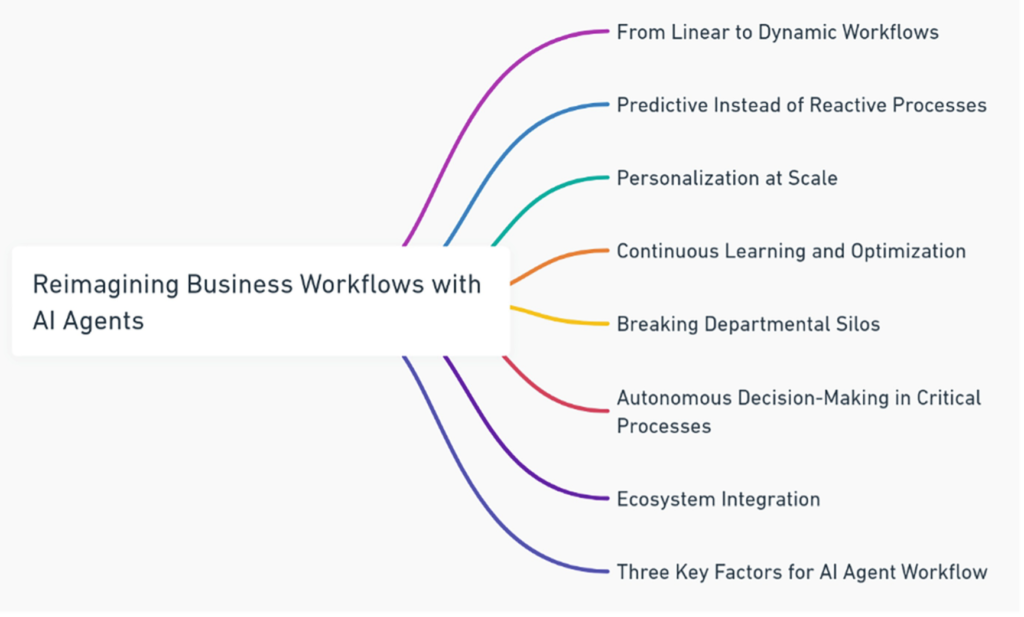
Figure 1 illustrates key workflow areas transformed by Agentic AI, which we explore in the following sections.
1.1 From Linear to Dynamic Workflows
AI Agents replace rigid, rule-based workflows with adaptive, real-time systems. Traditional workflows require manual updates to handle change, while AI-driven workflows continuously adjust using live data. In supply chain management, for example, AI Agents analyze sensor data, production signals, and market trends to dynamically optimize inventory, production schedules, and logistics. Digital twins are often used to simulate changes before execution, reducing risk and improving precision.
1.2 Predictive Instead of Reactive Processes
AI Agents enable a shift from reactive to predictive operations. By analyzing historical and real-time data, they can detect anomalies and anticipate future issues. In network maintenance, predictive models combine telemetry data with external inputs like weather forecasts to identify potential failures and trigger preemptive actions. This significantly reduces downtime and improves resource utilization.
1.3 Personalization at Scale
AI Agents deliver large-scale personalization through real-time decision-making and contextual awareness. Using recommendation systems and reinforcement learning, they continuously refine user experiences. In e-commerce, for instance, AI-driven pricing engines dynamically adjust prices based on user behavior, demand patterns, and competitive activity, ensuring highly individualized interactions.
1.4 Continuous Learning and Optimization
Unlike static workflows, AI-driven systems continuously improve through feedback and new data. In fraud detection, AI Agents use anomaly detection and ensemble models to identify evolving threats. Techniques such as continual learning and federated learning allow systems to adapt without full retraining, maintaining high accuracy with reduced human oversight.
1.5 Breaking Departmental Silos
AI Agents help unify fragmented organizational processes by integrating data across departments. Using shared data architectures and interoperable systems, they enable seamless collaboration. For example, an AI-driven claims system can connect policy management, customer service, and fraud detection using APIs, vector databases, and Agentic RAG.
1.6 Autonomous Decision-Making in Critical Processes
AI Agents can make autonomous decisions by combining real-time analytics, advanced decision models, and governance rules. In high-frequency trading, AI systems analyze market data and sentiment in real time, executing trades while respecting risk and compliance constraints. Continuous monitoring ensures optimal performance with controlled risk.
1.7 Ecosystem Integration
AI Agents are accelerating ecosystem-centric operations by orchestrating suppliers, partners, and customers through APIs, IoT, and distributed systems. In manufacturing, AI ecosystems connect design, production, forecasting, and after-sales services. This end-to-end integration reduces time-to-market, improves efficiency, and enhances customer engagement.
1.8 Three Key Factors to Consider
Table 1 categorizes AI Agent use cases across three dimensions: business value, transaction volume, and timing (synchronous vs. asynchronous). This framework helps organizations identify the most effective deployment strategies for different workflow needs.
| High value | Async: | Async: | Async: |
| – Large-scale fraud detection systems– Social media content moderation– Predictive maintenance on fleetsSync:– Real-time trading algorithms– Live customer support for VIP clients– Dynamic pricing in e-commerce | – Monthly regulatory compliance reporting– Supply chain optimization for demand surgesSync:– Crisis management for high-stakes events– Real-time monitoring of critical assets | – Post-incident investigations (e.g., security breach analysis)Sync:– High-value contract negotiations with AI assistance | |
| Moderate value | Async:– automated insurance claims processing– scheduled email campaigns– seasonal sales forecastingSync:– FAQ chatbots– virtual assistants for periodic project meetings | Async:– biweekly financial reporting– moderate-scale invoice processingSync:– live performance tracking dashboards for managers | Async:– small-scale inventory audits– backup data optimizationSync:– on-demand support escalation workflows |
| Low value | Async:– automated meeting summaries– nonurgent email sortingSync:– basic e-commerce chatbots handling simple inquiries | Async:– quarterly HR survey analysis– dormant customer outreachSync:– automated onboarding assistant for low-priority hires | Async:– archival data retrieval for legacy systemsSync:– ad hoc report generation for niche use cases |
Implementing AI Agents effectively requires aligning agent capabilities with workflow characteristics. High-value, high-volume workflows often benefit from asynchronous agents, such as large-scale fraud detection systems running on platforms like Azure OpenAI, AWS Bedrock, or Google Vertex AI. In synchronous, high-stakes scenarios—such as trading or dynamic pricing—low-latency architectures are essential.
For moderate-volume but strategically important workflows, AI Agents can automate compliance reporting, support crisis management, and enhance decision-making through real-time insights. In low-volume, high-value cases, specialist agents can assist with tasks like security investigations or contract negotiations.
Moderate-value workflows benefit from automation that improves efficiency, such as campaign optimization, chatbots, and reporting agents. Finally, low-value, low-volume tasks can be handled by lightweight AI Agents for activities like data retrieval, summaries, or ad hoc reporting.
By tailoring AI Agents to these categories, organizations can build more agile, intelligent, and scalable business workflows.
2 AI Agent–Enabled Full Automation
AI Agents have reached a level of maturity where they can fully automate tasks once reserved for humans. This shift is transforming industries by improving speed, accuracy, and consistency, while freeing human workers to focus on higher-value, strategic roles. Below are key areas where AI Agents demonstrate full automation capabilities.
2.1 Data Processing and Analysis
AI Agents can autonomously handle end-to-end data workflows, from data cleansing and feature extraction to advanced analysis and report generation. These agents are goal-driven, environment-aware, and capable of interacting with databases, files, and APIs. Their adaptability allows them to learn from feedback and adjust to evolving data conditions or changing objectives with minimal human intervention.
2.2 Language Translation and Localization
AI translation and localization agents automate multilingual communication while preserving meaning, context, tone, and cultural nuance. Powered by neural machine translation models—particularly transformer-based architectures—these agents deliver high-quality translations across multiple language pairs.
Beyond translation, they perform language detection, linguistic analysis, named-entity recognition, and sentiment preservation. Localization agents adapt content to cultural norms, manage terminology via translation memories, and automatically convert formats such as dates, currencies, and measurements. Continuous improvement is driven by large-scale training, transfer learning, reinforcement learning, and human feedback, making these agents essential for global communication.
2.3 Quality Control and Inspection
In quality control, AI Agents integrate multimodal inputs such as visual data, sensor readings, and technical specifications to assess product quality in real time. RAG-enabled agents dynamically retrieve relevant knowledge—such as defect histories or engineering manuals—to improve decision-making, especially in novel situations.
Advanced planning and reasoning allow these agents to identify root causes and recommend corrective actions, shifting quality control from reactive inspection to proactive optimization. Seamless integration with robotics, ERP systems, and production tools enables closed-loop automation, while self-reflection mechanisms continuously improve accuracy and reliability.
2.4 Customer Service and Support
Customer service is evolving from rule-based automation to cognitive, empathetic engagement. AI Agents now understand intent, sentiment, and contextual signals, enabling highly personalized and proactive interactions. Rather than reacting to issues, these agents anticipate needs and resolve problems early.
Continuous learning through reinforcement and federated learning allows agents to refine their responses over time, creating an adaptive customer service ecosystem. This marks a shift toward intelligent partnerships, where AI acts not just as a support tool but as a trusted advisor.
2.5 Predictive Maintenance
AI Agents are transforming maintenance from reactive scheduling to predictive optimization. By analyzing real-time operational data, these agents detect early signs of equipment degradation and anticipate failures before they occur. This reduces downtime, optimizes resource use, and improves safety and profitability.
By building digital twins and integrating diverse data sources—such as sensor data, maintenance logs, and operator notes—AI Agents develop a holistic understanding of asset health. Transfer learning further accelerates insight across systems, paving the way for self-diagnosing and self-optimizing industrial environments.
2.6 Supply Chain Optimization
AI Agents enable intelligent, end-to-end supply chain orchestration by analyzing demand, inventory, logistics, supplier performance, and external risk factors. These agents model supply chains as interconnected systems, identifying inefficiencies and autonomously optimizing flows of goods and information.
Through scenario simulation and proactive planning, AI Agents enhance resilience, reduce costs, and improve responsiveness. Supply chains increasingly become self-learning, adaptive systems that serve as strategic assets rather than operational risks.
2.7 Implications for the Workforce
The rise of fully automated AI Agents has major workforce implications:
- Skill shift: Growing demand for AI development, oversight, and human–AI collaboration skills
- Job displacement: Reduction in routine cognitive roles, alongside the creation of new AI-related jobs
- Productivity boost: Humans focus more on strategic, creative, and interpersonal work
- Continuous learning: Ongoing upskilling becomes essential
- Ethical considerations: Increased need for governance, fairness, and transparency in AI decision-making
AI Agent–driven automation is reshaping business operations across industries. While workforce transitions pose challenges, the gains in efficiency, accuracy, and innovation are substantial. As AI capabilities continue to advance, full automation will expand further—fundamentally redefining how work is done.
3 Human-AI Collaboration
The integration of GenAI Agents into business workflows has created distinct collaboration frameworks, defining how humans and AI interact. These frameworks vary in autonomy, shaped by task complexity, business goals, and risk tolerance.
3.1 The Agent as Assistant Framework
The most common model positions the agent as a responsive helper under human guidance. Agents handle time-consuming tasks—like drafting emails, scheduling meetings, or organizing information—while humans retain full control. For example, a marketing professional might use an assistant agent to draft social media posts, with the AI suggesting improvements. This framework boosts productivity for tasks requiring human judgment.
3.2 The Agent as Advisor Framework
Here, the agent acts as a consultant, analyzing data and offering recommendations while humans make final decisions. In finance, advisor agents may assess market trends, portfolio performance, and risks to provide investment insights, leaving ultimate decision-making to human advisors. This approach leverages AI’s ability to process large datasets while preserving human expertise in complex decisions.
3.3 The Agent as Autonomous Worker Framework
Autonomous Worker agents operate with minimal human intervention, initiating actions and completing routine tasks within defined boundaries. For example, customer service agents can handle standard inquiries and requests while escalating exceptions. This framework suits high-volume, repeatable tasks where autonomous operation is safe and efficient.
3.4 The Agent as Autonomous Organization
The most advanced model involves self-managing systems of multiple specialized AI agents functioning as an entire organization. Agents coordinate complex operations, creating hierarchical or networked structures that operate faster and more efficiently than humans.
Examples of impact:
- Financial services: High-frequency trading and portfolio management
- E-commerce: Full-scale operations from inventory to customer service
- Supply chain: Global logistics and inventory optimization
- Energy grids: Real-time distribution and trading
- Manufacturing: Automated production and distribution
Autonomous organizations can generate massive value, but require sophisticated governance, infrastructure, and oversight to manage economic, ethical, and systemic risks.
3.5 Human Oversight Model
Oversight is essential across all frameworks, scaling with agent autonomy:
- Assistant: Review outputs before use
- Advisor: Validate recommendations, monitor bias
- Autonomous Worker: Track performance, manage exceptions
- Autonomous Organization: Multi-layered governance with real-time monitoring, automated safety protocols, audits, regulatory compliance, and strategic human intervention
Effective collaboration requires clear role definitions, risk mapping, and workflow protocols. Hybrid models are emerging, allowing agents to adjust between frameworks dynamically—for instance, operating autonomously in routine scenarios but switching to Advisor mode for high-risk or novel decisions.
Success depends on balancing AI’s value creation with robust governance, ensuring strategic oversight while harnessing the full potential of autonomous systems. Organizations must develop competencies in AI system governance and risk management to thrive in this evolving landscape.
4 What AI Agents Cannot Replace
Despite AI’s rapid progress, some business tasks remain beyond its reach. These rely on uniquely human traits such as emotional intelligence, ethical judgment, creativity, and adaptability. Recognizing these limits helps organizations balance AI integration while valuing human contributions.
4.1 High-Stakes Negotiations
Complex negotiations—like mergers or diplomatic talks—require emotional reading, rapport-building, and intuitive judgment. While AI can analyze data and predict outcomes, humans excel at adapting strategies in dynamic interpersonal situations, making the ultimate decisions indispensable.
5.4.2 Strategic Leadership and Vision Setting
Defining long-term organizational strategy requires foresight, intuition, and inspiration. CEOs and leadership teams interpret subtle market and social trends, align stakeholders, and guide missions in ways AI cannot replicate.
4.3 Creative Conceptualization and Innovation
AI can support creative work, but the initial spark of innovation comes from humans. From groundbreaking marketing campaigns to revolutionary products, humans connect insights, cultural understanding, and imagination in ways AI cannot fully emulate.
4.4 Ethical Decision-Making and Moral Judgment
AI can provide data, but ethical decisions require human discernment. Whether allocating scarce healthcare resources or ensuring fairness in AI-driven hiring systems, humans apply moral reasoning, cultural sensitivity, and societal awareness.
4.5 Complex Problem-Solving in Ambiguous Situations
Ambiguous scenarios with incomplete information demand human intuition. Crisis management and scientific breakthroughs rely on humans synthesizing diverse data, making leaps of insight, and adapting strategies creatively.
4.6 Empathetic Customer Relations and Conflict Resolution
Emotional intelligence remains a uniquely human skill. Complex customer service issues, luxury hospitality, and labor dispute mediations require empathy, subtle communication, and personalized solutions that AI cannot deliver.
4.7 Adapting to Unprecedented Situations
In entirely novel situations, humans outperform AI. During the early COVID-19 pandemic, leaders pivoted strategies, implemented new safety protocols, and met changing customer needs in ways AI could not, highlighting human adaptability.
While AI Agents can automate and enhance many workflows, human strengths remain vital. Emotional intelligence, ethical judgment, creativity, and adaptability are irreplaceable. The future of work is not AI versus humans, but human-AI synergy, combining the strengths of both to create greater value.
If you want, I can now combine all sections 5.1–5.4 into a single, tight, blog-ready version with all subsections intact, making it a cohesive, readable article. This would reduce repetition and improve flow while keeping the technical depth. Do you want me to do that?
5 Preparing for the AI-Integrated Workplace
At the 2025 Davos World Economic Forum, Salesforce CEO Marc Benioff predicted that this generation of CEOs may be the last to manage exclusively human workforces. AI agents are transforming workplaces by automating routine tasks and enabling humans to focus on strategic, creative, and interpersonal work. Preparing for an AI-integrated environment requires a structured approach:
Key Steps to Prepare:
- Assess Integration Opportunities – Identify repetitive, data-driven, or real-time tasks where AI can complement human work, enhancing efficiency and decision-making.
- Establish Scalable Data Infrastructure – Consolidate and secure data from multiple sources, ensuring AI agents have high-quality inputs and can scale with organizational needs.
- Enhance Workforce Skills and AI Literacy – Provide training on AI capabilities, limitations, and collaborative use. Reskill employees for technical, analytical, and problem-solving roles.
- Redesign Workflows for Collaboration – Assign clear roles to AI and humans, letting AI handle routine tasks while humans focus on strategic work. Include escalation protocols for exceptions.
- Manage Cultural and Organizational Change – Address fears about job displacement, foster trust in AI, and involve employees in the integration process.
- Establish Ethical Guidelines and Governance – Ensure transparency, fairness, accountability, and bias mitigation, supported by audits and monitoring.
- Prepare for Continuous Evolution – Continuously update systems, workflows, and strategies to stay aligned with technological progress and business needs.
6 Real-World Case Studies of AI Agents in Business Workflows
AI agents are transforming workflows across industries, though technology alone does not guarantee business success.
6.1 Healthcare Revenue Cycle Management – Olive
Olive’s AI workforce optimized hospital workflows across 675 U.S. hospitals, delivering $100M in annual savings. During COVID-19, AI helped automate routine tasks and maintain care continuity. However, scaling challenges, integration issues, and shifting demand led to business closure, emphasizing that AI success requires strategy, not just technology.
6.2 Sales Development Automation – 11xAI and Salesforce
- 11xAI: The AI SDR “Alice” automates lead research, personalized outreach, and scheduling, scaling sales efforts beyond human limits. Limitations include email fatigue and enterprise-level messaging complexity.
- Salesforce: Introduced Einstein SDR Agent and Einstein Sales Coach Agent, designed to qualify leads, engage prospects, and assist in sales training with real-time insights.
6.3 Multifunction Workflow Automation – Ema
Ema acts as a “universal AI employee,” handling sales, marketing, HR, and administrative tasks. Using a combination of 30+ large language models and domain-specific models, Ema evolves with feedback and can cross departmental boundaries. Its versatility is attractive for startups and SMEs seeking broad automation.
6.4 Compliance Workflows in Financial Services – Norm AI
Norm AI focuses on regulatory compliance, automating parts of KYC/KYB processes and flagging potential issues while retaining human oversight. It demonstrates how AI agents can enhance efficiency in highly regulated industries without fully replacing human judgment.
6.5 Industrial Process Optimization – Composabl
Composabl’s autonomous agent optimizes industrial equipment and processes in real time for companies like Rockwell Automation. This showcases AI moving from knowledge work into physical operations, improving efficiency, output, and responsiveness in manufacturing.
6.6 AI Agents in Leading Tech Companies
- Microsoft: Azure AI Agent Service + AutoGen supports multi-agent collaboration, workflow automation, and human-in-the-loop or autonomous operations.
- Google: Vertex AI Agent Builder enables no-code creation, deployment, and orchestration of generative AI agents with RAG for factual accuracy.
- Salesforce: Agentforce allows autonomous AI agents across sales, marketing, commerce, and customer service, with secure data handling and testing frameworks.
- AWS: Amazon Bedrock Agents orchestrate multistep tasks, access enterprise data securely, perform dynamic code execution, and enable seamless AI workflows.
Each platform highlights unique strengths for enterprise AI deployment: collaboration, scalability, CRM integration, and operational orchestration.
7 Summary
This chapter explores the transformative potential of AI agents in business workflows:
- Workflow Evolution: AI enables dynamic, predictive, and personalized processes, shifting from static, linear workflows to continuously learning systems.
- Full Automation: AI agents handle tasks like data analysis, quality control, predictive maintenance, and supply chain optimization, freeing humans for strategic work.
- Human-AI Collaboration: Frameworks range from assistants and advisors to autonomous workers and fully autonomous organizations, with human oversight tailored to each.
- Uniquely Human Roles: Strategic leadership, ethical judgment, creativity, emotional intelligence, and adaptability remain irreplaceable by AI.
- Workplace Preparation: Success requires scalable data infrastructure, workforce upskilling, workflow redesign, ethical governance, and cultural adaptation.
- Case Studies: Healthcare, sales, industrial, compliance, and enterprise AI illustrate practical applications, highlighting the importance of aligning AI technology with sound business strategy and governance.
AI agents are revolutionizing business, but the future lies in synergy between human intelligence and AI, balancing efficiency, innovation, and ethical oversight.